
Computational Behaviour
A new two-week, immersive course launching July 2027.
Build practical skills in analytics and models of individual and interacting agents through a live, synchronous program designed for focused, hands-on learning.
Neuromatch and Connected Minds partner to launch groundbreaking Computational Behaviour course
First-of-its-kind two-week programme to train the next generation of researchers in collective behaviour modelling
Neuromatch, the global nonprofit advancing open computational science education, today announced a new course developed in partnership with Connected Minds, a CFREF-funded initiative hosted at York University in Toronto, Canada. Computational Behaviour: Analytics and Models of Individual and Interacting Agents will launch in July 2027 as a fully remote, two-week live programme supported by dedicated Teaching Assistants. A self-paced, asynchronous version using the same materials will also be available to anyone, anywhere, at no cost.
The course will teach the computational foundations of collective behaviour — from processing raw behavioural recordings to modelling how agents perceive, communicate, coordinate, and form collectives.
The course addresses a critical and timely gap in scientific training. Understanding how agents interact and form collectives is central to neuroscience, psychology, economics, and AI, yet no existing programme integrates measurement, modelling, and collective dynamics within a unified computational framework. Three developments make this course particularly timely: deep learning-based tools now enable scalable quantification of complex behaviour; multi-agent human–AI systems are rapidly growing in both research and deployment; and the behavioural and social sciences are undergoing a computational turn that demands accessible, high-quality training in formal modelling methods.
The course is a direct output of Connected Minds' CFREF-funded research programme, demonstrating how federally funded initiatives can generate accessible, global educational impact beyond traditional academic boundaries.
Bradley Roberts, CEO of Neuromatch, added: "Computational behaviour has been a missing piece in the Neuromatch Academy course catalogue. With generous support from Connected Minds and under the scientific leadership of Gunnar Blohm, Neuromatch looks forward to collaborating with experts across the scientific community to build this exciting new course for the global research community at large."
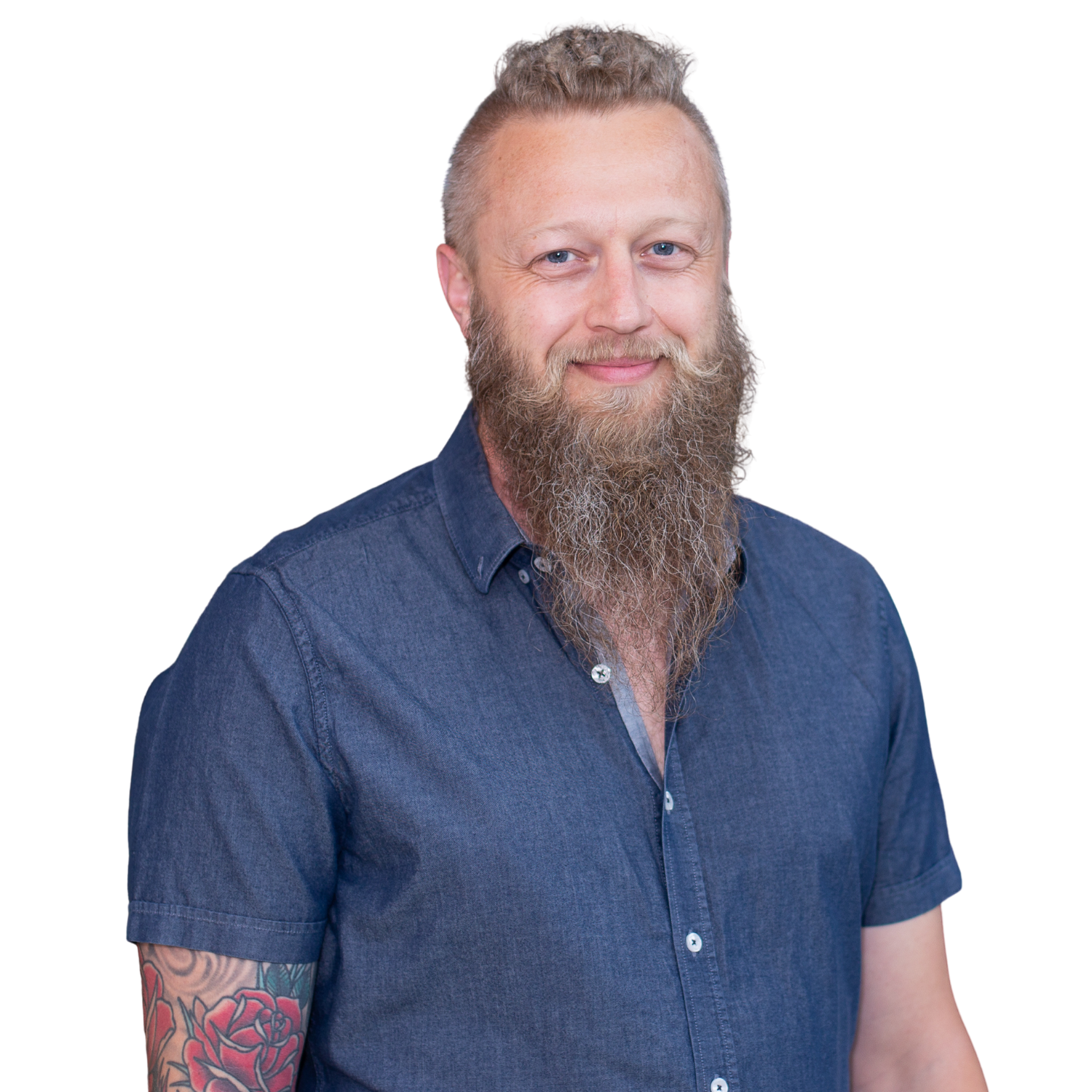
Course Director
Gunnar Blohm, Professor in Computational Neuroscience, Queen's University; Vice-Director, Connected Minds
"Collective behaviour is one of the most exciting frontiers in computational science, yet researchers have had to piece together training from disparate fields with no unified framework. This course changes that. We're giving the next generation of scientists the tools they need to tackle some of the most pressing questions in neuroscience, AI, and beyond."
A partnership built for impact
This course is made possible through the collaboration of two organisations committed to open, inclusive, and rigorous computational science education.
As AI and emerging technologies reshape society, Connected Minds, supported by the Canada First Research Excellence Fund (CFREF), drives interdisciplinary research and partnerships that embed co-creation to ensure AI-driven innovation is ethical, inclusive, and socially responsible. By working collaboratively with communities through transparent and engaged approaches, we tackle systemic inequities and build trust, shaping the future of AI and emerging technologies for the public good.
Neuromatch is a global nonprofit organisation with a mission to accelerate scientific innovation by facilitating inclusive, collaborative, and global participation in the computational sciences. Through open, accessible, and community-driven education, Neuromatch breaks down barriers to high-quality training in computational research. Since its founding in 2020, Neuromatch has directly trained over 13,000 students from 137 countries.
Help us shape the future of computational behaviour
Curriculum committee
Shape the course from the ground up.
We're building something new and we need experienced researchers to help design the curriculum. We have finished recruitment of our volunteer curriculum committee and meeting have started.
Get involved
We need your expertise to help build this course.
We're building volunteer positions across curriculum development, teaching support, community engagement, and more. Details are coming soon. If you're interested in getting involved, join our mailing list to stay updated on opportunities as they become available.
Beta testers
Help us refine the course before launch.
In late 2026, we'll be opening beta testing for an early version of the course. Beta testers will get an exclusive early look at the materials and contribute directly to the final version before launch. Stay tuned for more details!
Join us as a student: 12-23 July 2027
Join our mailing list
Be the first to hear when applications open for our 2027 courses.
Join a Information Session
Each January we host Information Sessions where you can ask your questions and learn exactly how to apply successfully.
Watch the January 2026 Session.
Ask an Ambassador
Our community of volunteer Neuromatch Ambassadors around the world can help answer your questions and share their experiences in multiple languages!
Apply
Applications for our 12-23 July 2027 course open in February 2027.
Applicants will be required to create a profile in our portal and complete an online application through the platform once applications open.
Have questions?
Please email us at nma@neuromatch.io
